Better Water at Home and Work Starts with the Right Solutions

Water has a way of becoming part of the background. We use it to make coffee in the morning, wash clothes, prepare meals, clean floors, and get through dozens of small tasks without thinking twice. At work, it may be even more important, supporting everything from kitchens and washrooms to manufacturing equipment and daily cleaning routines.
But when water starts causing problems, it doesn’t take long to notice. White deposits appear around taps, glasses come out of the dishwasher looking cloudy, or plumbing fixtures develop stains that seem impossible to remove. For a business, the effects can extend to equipment performance, cleaning standards, and operating costs.
The good news is that water problems often have practical solutions. The trick is understanding what’s happening before investing in equipment. A little investigation can help homeowners and business owners make smarter decisions, protect their plumbing, and enjoy water that better suits their everyday needs.
Understanding What Comes Through Your Tap
Water isn’t exactly the same everywhere. Its characteristics depend on the source, the local geology, and the treatment it receives before reaching a property. Even within the same town, households may experience different issues depending on whether they use municipal water or a private well.
Hard water is one of the most common complaints. It contains elevated levels of minerals, particularly calcium and magnesium. These minerals aren’t usually a health concern at typical levels, but they can leave scale inside pipes, water heaters, and appliances. Soap may also lather less effectively, which can make showers and laundry feel less satisfying.
Other properties may deal with sediment, iron staining, unpleasant tastes, or odors. Some issues are primarily cosmetic, while others may indicate a need for further investigation. For example, a sudden change in taste or appearance shouldn’t automatically be blamed on hard water.
Understanding the source of the problem is the first step toward choosing an effective solution. Rather than guessing based on what a neighbor installed, consider testing the water or consulting a qualified water professional who can assess your particular situation.
When Hard Water Becomes a Daily Frustration
Hard water has a habit of showing up in places you might not expect. A kettle develops a chalky coating, shower doors collect stubborn spots, and faucets lose their shine. You might find yourself using extra soap or cleaning products without getting the results you want.
Over time, mineral scale can also accumulate in water heaters and certain appliances. The effect depends on the water’s hardness, the equipment involved, and how regularly everything is maintained. In some circumstances, scale buildup can reduce efficiency and contribute to repair costs.
This is where water softeners can be useful. These systems typically use an ion-exchange process to reduce calcium and magnesium, replacing them with other ions, commonly sodium. By reducing hardness, a softener can help limit mineral deposits and make routine cleaning easier.
Still, a softener isn’t the answer to every water concern. It doesn’t automatically remove bacteria, pesticides, or all dissolved contaminants. People who need to limit sodium intake should also discuss softened drinking water with an appropriate healthcare professional and consider whether a separate drinking-water tap or another arrangement makes sense.
The best approach is to confirm that hardness is actually the problem, then select a system sized for the household’s water use and mineral levels.
Finding Water Solutions That Fit Your Home
Every home has different needs. A small apartment, a busy family house, and a rural property with a private well won’t necessarily benefit from the same equipment. Household size, water consumption, available space, and the source of the water all influence what will work best.
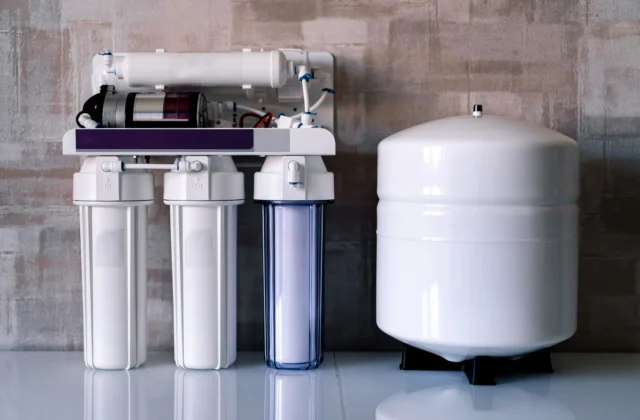
Well-chosen home water solutions may include sediment filtration, activated carbon filtration, water softening, or specialized treatment where testing identifies a particular concern. Each option has a different purpose. Sediment filters capture particles, while activated carbon can reduce certain substances that affect taste and odor. Other systems may be needed for specific chemical or microbiological issues.
For drinking water, some homeowners prefer a dedicated point-of-use filter near the kitchen sink. Others need treatment for the entire property because scale, sediment, or another issue affects multiple fixtures. A whole-house system can be convenient, but it should be selected according to actual water conditions rather than the assumption that a larger system is always better.
Don’t overlook maintenance when comparing products. Filters need replacing, softeners may require salt, and some equipment needs periodic cleaning or professional servicing. Ask about the cost of replacement parts, the recommended service schedule, and the contaminants a system is certified to reduce.
A realistic maintenance plan helps prevent an otherwise useful investment from becoming another neglected appliance in the utility room.
Why Businesses Need to Think Differently About Water
Commercial properties often have more complicated requirements than homes. A café may need consistent water for coffee preparation and dishwashing. A hotel might want to reduce scale in boilers, showers, and laundry equipment. A manufacturing facility could have precise water specifications for its processes.
In these settings, a water issue can affect more than convenience. Mineral deposits may increase maintenance demands, poor taste can influence customer experience, and unsuitable water chemistry may interfere with certain operations. The consequences depend on the business and how water is used.
Effective business water solutions begin with a clear assessment of operational needs. A restaurant may prioritize drinking-water quality and reliable equipment operation, while a commercial laundry may focus on hardness and cleaning performance. A facility using water in production may need more detailed analysis and treatment specifications.
System capacity is particularly important in commercial settings. Equipment must be able to handle peak demand without causing inconvenient drops in supply. Maintenance access matters, too, because a system that is difficult to service can create unnecessary downtime.
Business owners should discuss daily consumption, peak usage, existing plumbing, and any relevant industry requirements with a qualified provider. This makes it easier to compare options based on performance and operating costs instead of simply choosing the system with the most impressive list of features.
Don’t Skip Water Testing and Professional Advice
Water testing helps distinguish between problems that look similar but require different responses. A laboratory can measure hardness, iron, pH, and other relevant characteristics. Depending on the water source and local risks, additional testing may be appropriate.
For private wells, routine testing is particularly important because homeowners generally need to arrange their own monitoring. Public health guidance commonly recommends annual testing for bacteria and nitrates for private wells in the United States, with other tests selected according to local conditions. Requirements and recommendations vary by region.
Municipal water users can consult their supplier’s water quality report, but a property may still have plumbing-related issues that deserve investigation. If water changes suddenly, testing at the appropriate point can help identify whether the concern originates in the supply or within the building.
A qualified provider should be willing to explain test results, identify the limitations of proposed equipment, and outline ongoing maintenance requirements. Be cautious of anyone who recommends expensive treatment before establishing what the water actually needs.
Make Maintenance Part of the Plan
Installing a treatment system is only the beginning. Filters gradually collect particles, softeners need appropriate regeneration and salt levels, and other equipment may require cleaning or inspection. Ignoring these tasks can reduce performance and, in some cases, create additional problems.
Keep a record of installation dates, service visits, filter replacements, and test results. Set reminders for routine tasks, and pay attention to changes in water taste, odor, appearance, or flow. These details can help identify when the system needs attention.
For businesses, planned maintenance is especially valuable because unexpected equipment problems may interrupt daily operations. Scheduling service during quieter periods can reduce disruption and make costs easier to manage.
Better Water Begins with Better Decisions
Whether you’re improving water in a family home or managing a busy commercial property, the most effective solution starts with understanding the problem. Water softening, filtration, and specialized treatment can all be useful, but each works best when matched to the right conditions.
Take time to evaluate your water, compare practical options, and consider the full cost of ownership. With appropriate testing and regular maintenance, you can reduce avoidable frustrations, protect equipment, and make better use of the water your property depends on every day.